In 2024’s ranking of the richest African countries, Kenya takes the 7th place. Its economy relies strongly on tourism, which can progress because of beautiful natural landscapes and the rich culture of the country. One of the most popular tourist attractions in Kenya is the safari – a jeep tour around a national park to observe exotic African animals.
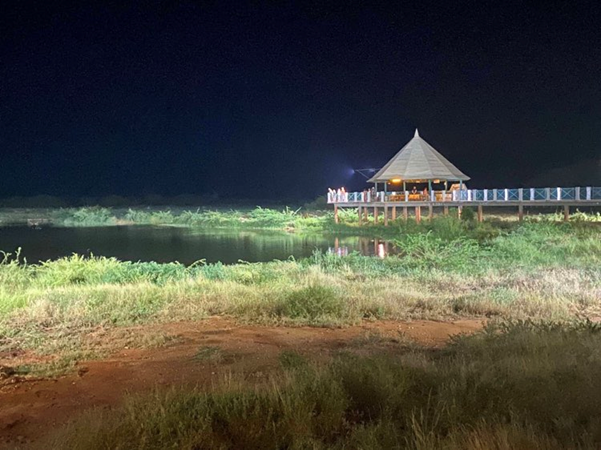
The safari usually starts early in the morning, when the heat does not yet make the animals hide, and depending on the trip, can last from one day to several weeks. In the latter case, tourists sleep in lodges located in the parks, usually with the view of a water hole. I had the pleasure of participating in Safari in Kenya in early 2025.
The view of the water hole often visited by elephants from Red Elephant Hotel
Source: Mary Sadowska
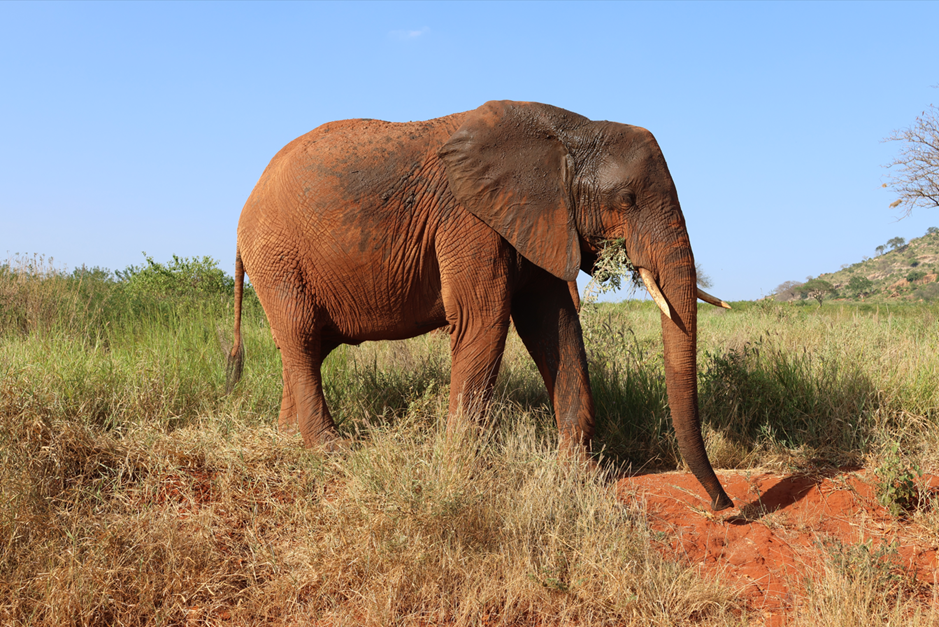
In Tsavo East National Park tourists have the possibility to see 4 of The Big African Five: African Elephants, cape buffalos, leopards, lions and (excluded) rhinoceroses. The largest of them, the African Elephant, is the biggest mammal living on land. The ones living in Tsavo tend to have red skin, which is caused by bathing in red mud and dust of ferrasols- the type of soil submitted to chemical weathering.
Bathing in dust helps the elephants protect themselves from the sun
Source: Mary Sadowska
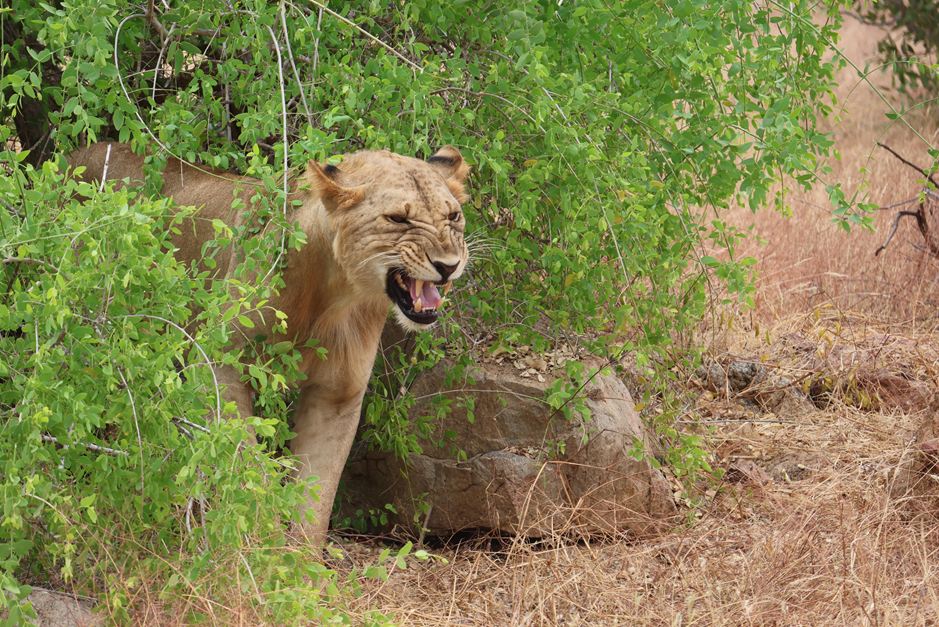
The dimensions of the elephants definitely can overwhelm, but it is the proximity of a lion which may cause the greatest emotions. They usually do not care about being observed by tourists and can get very close to a jeep due to their natural curiosity. What can be shocking, male lions in Tsavo usually do not have the thick mane we always imagine, for it is dependent on the genetics of an individual.
A male lion hiding in the bushes
Source: Mary Sadowska
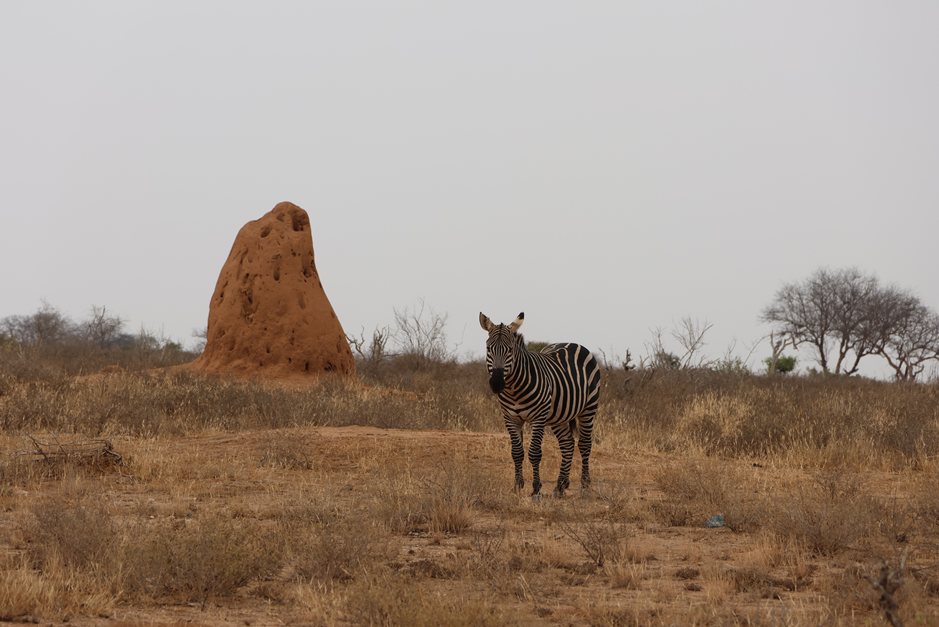
Besides the Big African Five, tourists in Tsavo can also see zebras, giraffes, warthogs, jackals, secretary birds and many more. However, one of the most interesting and often overlooked animals are termites, the mounds of which can be seen all around the park. Termites are used in Sahelian countries in a non-predatory farming technique called Zaï, as the corridors they dig in the soil aerify it.
A zebra standing next to a termites’ mound that usually are about 3 meters high
Source: Mary Sadowska
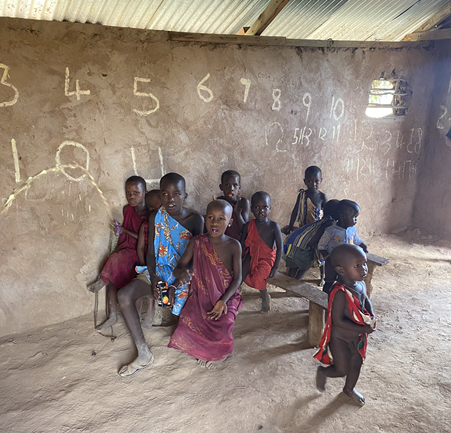
What is intriguing, Masai tribes used to live in the areas where now there are national parks. Due to the laws protecting these areas, they cannot entry them now and tend to live in small villages of adobe huts just over the boundaries of the parks. Because of the progress of civilization, they also had to partly abandon their nomadic lifestyle. Nowadays, they usually live on tourism by showing their traditions to visitors. The Masai usually speak Suahili, the official language of Kenya, and learn English to communicate with tourists, but between each other they use their own Masai language. They also practice polygamy and polyandry, because of the high rates of children deaths in rather small communities. The children are taught in local schools, as education is obligatory in Kenya. Their community is strongly patriarchal, but women handle most of the chores in the village- they even build the adobe huts.
Masai children in a local school in Kenya
Source: Mary Sadowska
Although tourism brings Kenya’s economy major incomes, the system relying on it is extremely fragile and can result in adverse behaviors of both the tourists and locals. The children running after safari jeeps in hopes of getting sweets from the tourists can be viewed as adorable. However, it does not really help their diet, already limited in some nourishments. This problem has extended in such way, that there are usually people selling overpriced sweets to the tourists nearby schools for the sole purpose of giving them to the children. The sweets and other free distribution will not fight the poverty whatsoever and it can sadly seal it. Teaching people from poorer countries to manage on their own is the only way of truly helping them in the long perspective.
No Comments Yet